2014-2024
Smart ForTwo 453
Refined Urban Mobility
AVAILABLE VARIANTS


Gallery
Engine Options
1.0L NA
Displacement
999 cc
Power
71 hp @ 6,000 rpm
Torque
91 Nm @ 2,850 rpm
Top Speed
150 km/h
Acceleration 0-100 km/h
15.1 s
0.9L Turbo
Displacement
898 cc
Power
90 hp @ 5,500 rpm
Torque
135 Nm @ 2,500 rpm
Top Speed
155 km/h
Acceleration 0-100 km/h
10.4s
0.9L Brabus
Displacement
898 cc
Power
109 hp @ 5,500 rpm
Torque
170 Nm @ 2,000 rpm
Top Speed
165 km/h
Acceleration 0-100 km/h
8.9 s
EQ Electric
Displacement
/
Power
82 hp
Torque
160 Nm
Top Speed
130 km/h
Acceleration 0-100 km/h
11.6 s
 ConceptMercedes-Benz sought a partner to share development costs. Renault's need for a city car aligned perfectly, leading to shared platform development. |  DevelopmentThe 453 was developed alongside the Renault Twingo III, sharing the rear-engine, rear-drive platform. This partnership brought the option of a proper manual gearbox for the first time. |  ProductionProduction began in Hambach (2-seater) and Novo Mesto, Slovenia (4-seater) in 2014. The wider track improved stability without increasing the turning circle, which actually decreased to a world class-leading 6.95 meters. Last model was produced until 2024. |
|---|---|---|
 LegacyThe 453 represented the most refined Smart yet. The partnership with Renault allowed for the Forfour variant, finally giving Smart a 4-seater option again after the short-lived 454. |
History: From Concept to Production
Common Problems
Every car has its quirks. Here are the most common issues reported by Smart 453 owners, along with solutions to help you address them.
High Risk
Coolant Thermostat Housing Leak
Medium Risk
DCT Gearbox Hesitation
Medium Risk
Loose/Jammed Front Hood
Medium Risk
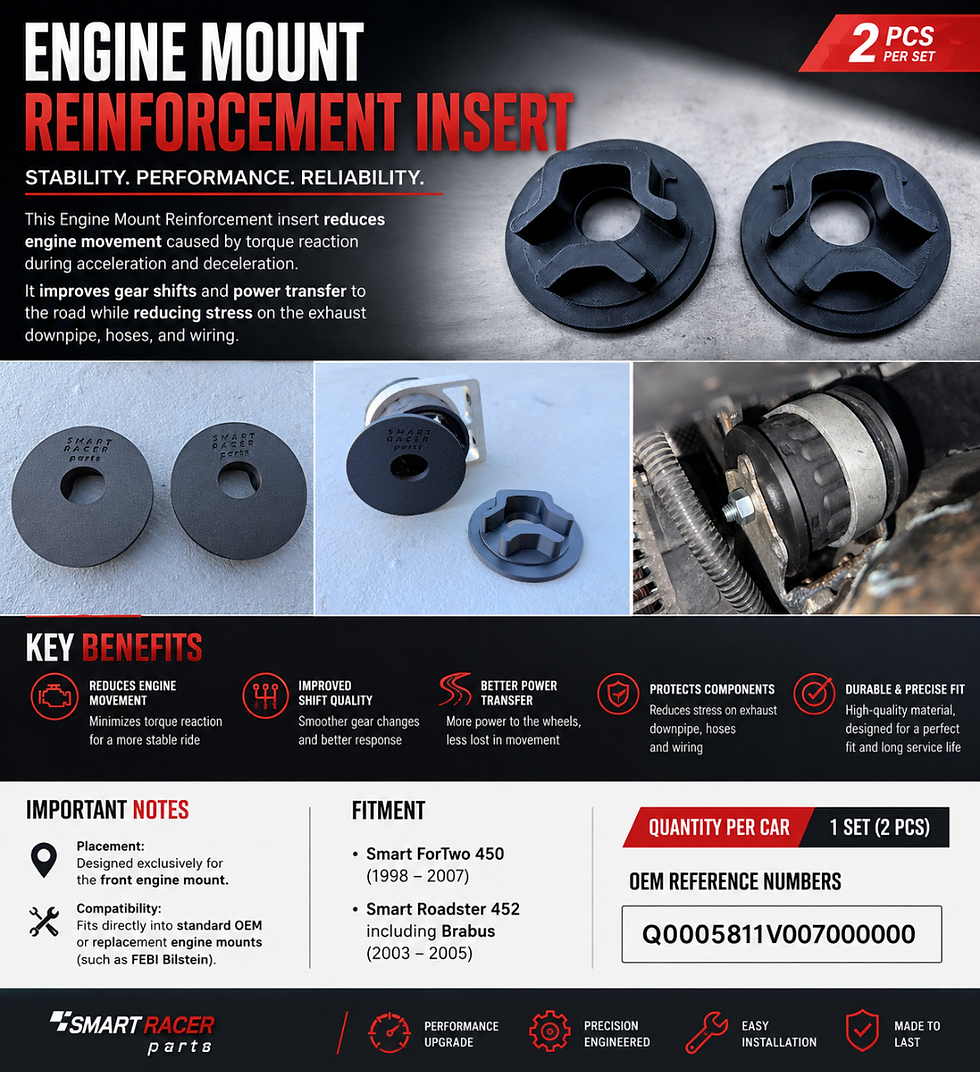
Rear Engine Mount Wear
Low Risk
12V Battery "Ghost" Errors
Low Risk
Squeaky Front Suspension
Buying Guide
Mechanical
DCT Gearbox Software: Ensure the car has the latest TCU (Transmission Control Unit) update. Early 2015–2017 models without the update suffer from jerky low-speed shifts.
Coolant Thermostat Housing: Inspect the plastic housing for leaks. It is a known weak point on the 0.9 Turbo engines and can cause sudden coolant loss.
Engine Torque Mount: Test for heavy vibration at idle. The rear "bone" mount often tears, leading to excessive engine movement and cabin noise.
Turbocharger Oil Lines: On 90hp models, check for oil dampness around the turbo. Clogged lines can lead to premature turbo failure.
Clutch Wear (Manual Models): If buying a manual, check for a high biting point. The 453 manual clutch is lighter than the 451 but can wear fast if used primarily in heavy city traffic.
Electrical
12V Battery Condition: The 453 is voltage-sensitive. An old battery will disable the Start-Stop system and trigger random ABS or Hill Start warnings.
Smart Media System (R-Link): Test the touchscreen for dead zones. These Renault-sourced units are prone to freezing and may require a SD card update for the navigation to work.
TPMS Sensor Life: Check the tire pressure monitor light. The internal batteries in the wheel sensors typically last 5–7 years; if the light is on, the sensors likely need replacement.
Blower Motor Noise: Turn the AC to full blast. A chirping or whistling sound indicates the blower motor is failing—a common and fiddly part to replace.
Reverse Camera/Sensors: If equipped, ensure the camera activates instantly. Slow engagement or a "blue screen" usually points to a wiring issue in the tailgate harness.
Exterior
Front Hood Latches: The removable plastic hood is held by two levers. Ensure they click firmly; if loose, the hood can vibrate or fly off at high speeds.
Headlight LED Strips: Inspect the "U-shaped" DRLs. If parts of the strip are dimmer or flickering, the entire headlight unit usually needs to be replaced.
Door Hinge Alignment: Check if the doors close smoothly. Due to their size, 453 doors can sag over time, leading to wind noise at highway speeds.
Panoramic Roof Crazing: Look for tiny internal "spider-web" cracks in the polycarbonate roof. This is caused by UV exposure and cannot be repaired, only replaced.
Service Flap Locking Cable: The cable connecting the front grille levers to the hood locks can snap. Ensure the levers feel "tight" when pulled.
Interior & Various
Smartphone Cradle Socket: Ensure the factory USB/Cradle port in the center of the radio isn't loose or broken. It’s a common point of failure for those using the OEM mount.
Seat Heater Elements: Test both seats. The heating wires in the 453 are thin and often snap in the side bolsters from the pressure of getting in and out.
Steering Wheel Leather: On high-mileage cars, the "leather" on the wheel can peel or become sticky. Check the 12 o'clock position for sun damage.
Rear Seat Folding (Forfour): On the 4-door model, test the "Ready Space" rear seats. The mechanism can jam if coins or small objects fall into the floor rails.
Cabin Filter Access: Ask when it was last changed. It’s buried deep in the footwell and often ignored, leading to a "musty" smell and poor AC performance.

Explore some of many Smart car guides